Waking up at 3AM every night? Learn why high performers experience nighttime wake ups and how to stop them permanently by fixing your sleep environment.

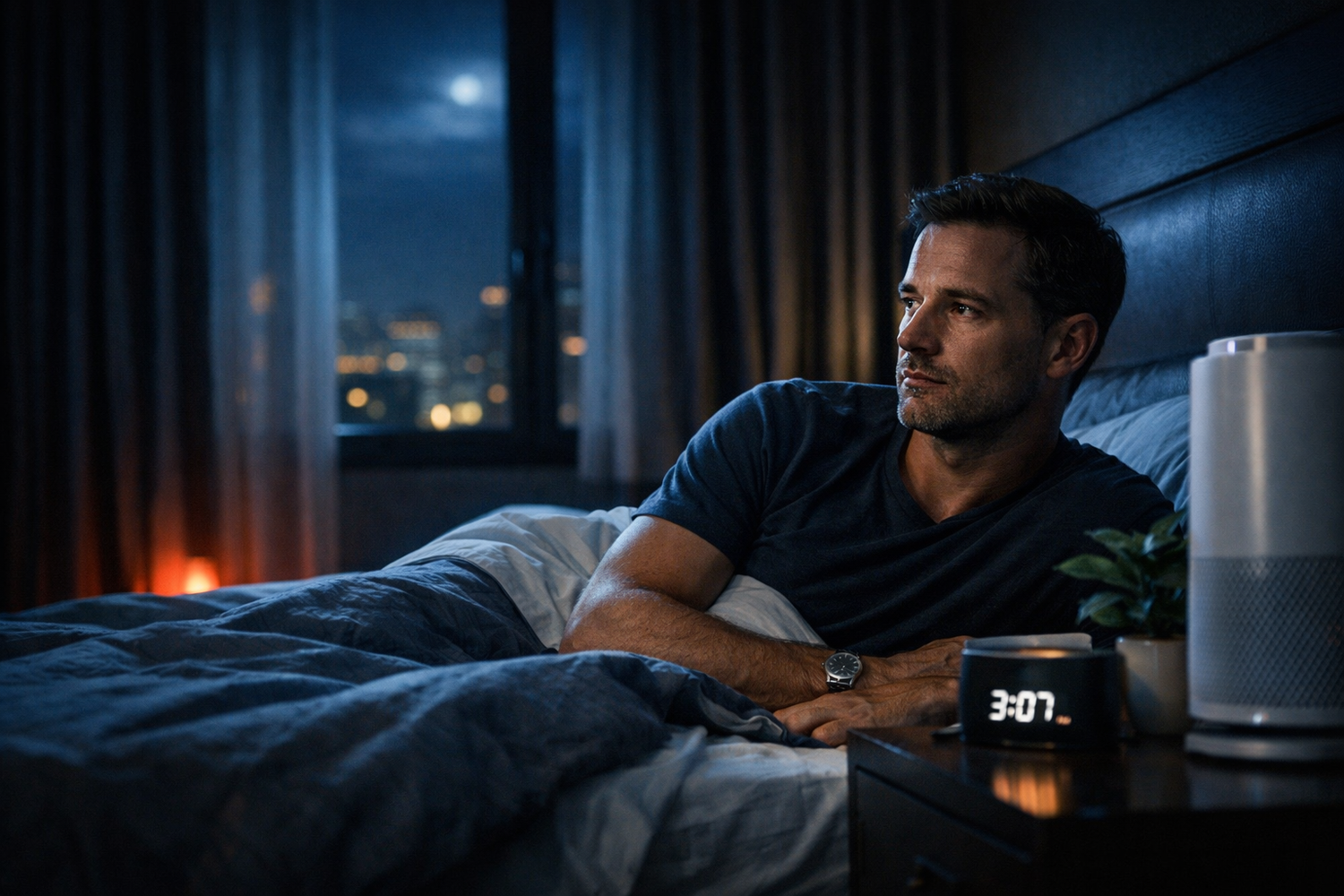
At exactly 3:07 a.m., the room is quiet—but your mind is not.
You’re not wide awake in panic.
You’re alert.
Too alert.
Your heart rate is slightly elevated. Your thoughts start drifting toward unfinished work, looming decisions, or a vague sense of pressure you can’t quite name. You lie there, waiting to fall back asleep. Minutes pass. Sometimes hours.
If this sounds familiar, you’re not alone, especially if you’re a high performer.
Doctors, therapists, and sleep experts agree waking up around 3 a.m. is one of the most common sleep complaints among adults. But what they rarely explain is why this problem disproportionately affects driven, high-achieving people and why most standard advice fails to fix it.
This article explains what’s really happening at 3 a.m., why high performers are especially vulnerable, and how to stop these wakeups at the root level, not just manage them.
The 3AM Wake-Up: What’s Actually Happening
Most articles explain 3 a.m. wakeups using surface-level causes:
- Stress
- Anxiety
- Cortisol
- Sleep cycles
- Blood sugar
- Alcohol
All of these can play a role. But they’re not the full story especially for people who are otherwise healthy, disciplined, and successful.
The real issue is this:
At 3 a.m., your brain performs a threat scan.
If your nervous system doesn’t feel “safe enough,” it transitions you from deep sleep into alertness.
High performers trigger this response more often not because they’re weak sleepers, but because their baseline stress activation is higher, even when they appear calm.
Why High Performers Are More Likely to Wake Up at 3AM
High performers tend to share several traits that quietly sabotage sleep:
- High baseline cortisol and adrenaline
- Constant cognitive load (decision-making doesn’t shut off easily)
- Irregular light exposure (screens, late work, artificial lighting)
- Temperature sensitivity from training, metabolism, or stress
- Light sleepers due to vigilance conditioning
In other words, your brain is trained to stay “on.”
And at 3 a.m. when sleep naturally becomes lighter, your environment determines whether you stay asleep or wake up.
The Hidden Trigger Most Articles Ignore: Your Sleep Environment
Here’s where most medical and wellness articles stop short.
They tell you what might cause the problem, but not why it keeps repeating.
The missing piece is environmental signaling.
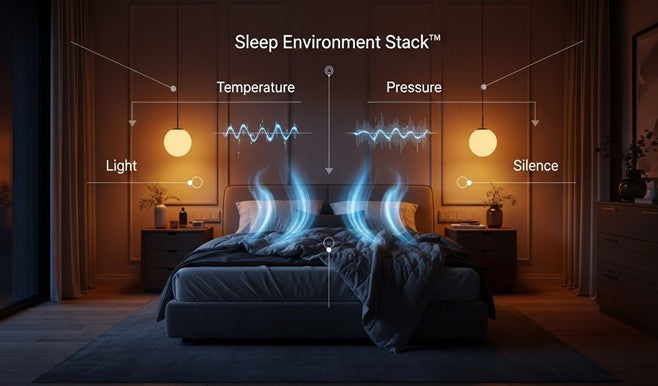
Your bedroom constantly sends signals to your brain about:
- Safety
- Threat
- Temperature stability
- Light exposure
- Sensory noise
At 3 a.m., even small disturbances can push your nervous system into alert mode.

The 4 Environmental Triggers Behind 3AM Wakeups
1. Light Leakage (Even Very Dim Light)
Streetlights, hallway LEDs, phone notifications, alarm clocks, your brain interprets light as a circadian command.
Even low-level light exposure can suppress melatonin and trigger alertness during light sleep stages.
2. Temperature Instability
Body temperature naturally drops during deep sleep. If your room warms slightly—due to HVAC cycling, bedding heat retention, or metabolism, your body wakes you to regulate.
This is one of the most overlooked causes of middle-of-the-night waking.
3. Air Quality & CO₂ Buildup
Poor airflow increases carbon dioxide overnight. Rising CO₂ levels subtly increase respiratory effort and stress responses, fragmenting sleep especially during lighter sleep phases.
4. Sensory Noise & Micro-Disturbances
In deep sleep, noise barely registers. At 3 a.m., it does.
Refrigerators, HVAC clicks, distant traffic, or a partner’s movement can push the brain into alertness unless masked or stabilized.

Why “Sleep Hygiene” Often Fails High Performers
Sleep hygiene advice usually includes:
- No screens before bed
- Relaxation techniques
- Consistent schedule
- Supplements
These help you fall asleep, but they don’t fix what wakes you up.
High performers don’t wake up at 3 a.m. because they forgot to meditate.
They wake up because their environment reinforces alertness when sleep becomes fragile.
This is why many people say:
“I fall asleep fine, but I can’t stay asleep.”
The Nervous System Factor: Why Your Brain Won’t Fully Power Down
At 3 a.m., your nervous system asks one question:
“Is it safe to remain unconscious?”
If the answer is unclear, you wake up.
Safety is communicated through:
- Darkness
- Cool, stable temperature
- Quiet, consistent sound
- Physical comfort and pressure
- Clean air
When those signals are strong, sleep continues.
When they’re weak or inconsistent, alertness wins.

How to Stop Waking Up at 3AM Permanently
The goal isn’t to force sleep.
The goal is to remove the signals that wake you up.
The 3AM Wake-Up Reset Framework
Step 1: Eliminate Light Intrusion
- Blackout curtains or complete window coverage
- No visible LEDs or clocks
- Warm red/amber night lighting only if needed
Step 2: Stabilize Bedroom Temperature
- Cooling mattress layers
- Breathable bedding
- Air circulation that doesn’t fluctuate
Step 3: Improve Air Quality
- Bedroom-rated air purification
- Slight airflow movement
- Plants that support calm and oxygen balance
Step 4: Mask Sensory Disruptions
- Consistent white or pink noise
- Pressure-based comfort (weighted blankets, ergonomic pillows)
Step 5: Signal Safety to the Nervous System
- Darkness
- Coolness
- Stillness
- Consistency

Why Systems Work Better Than Single Fixes
Most people try to fix one variable:
- A supplement
- A tracker
- A sound machine
But sleep is environmental, not pharmaceutical.
Permanent improvement comes from stacking the right signals, so your nervous system never feels the need to wake you up.
The Bottom Line
If you’re a high performer waking up at 3 a.m., the problem isn’t discipline, motivation, or willpower.
It’s misaligned environmental signaling.
Fix the signals and your sleep takes care of itself.

If what you’ve read resonates if you’re tired of waking up wired instead of restored there is a complete solution designed specifically for this problem.
The Sleep Sanctum™
👉 Transform Your Bedroom into a Sleep Sanctuary
🔗 https://luxsmarthomeliving.com/pages/the-sleep-sanctum
The Sleep Sanctum™ is a neuroscience-backed sleep environment system designed to eliminate the exact triggers that cause 3 a.m. wake-ups.
- Circadian light disruption
- Temperature instability
- Air quality stress
- Sensory overload
Instead of chasing sleep with hacks, it redesigns your bedroom to keep you asleep.
Add a Sleep Optimization Checklist PDF or Jet-Lag Reset Protocol for travelers and executives