
The Sleep Environment Stack
The Complete System for Deep Sleep

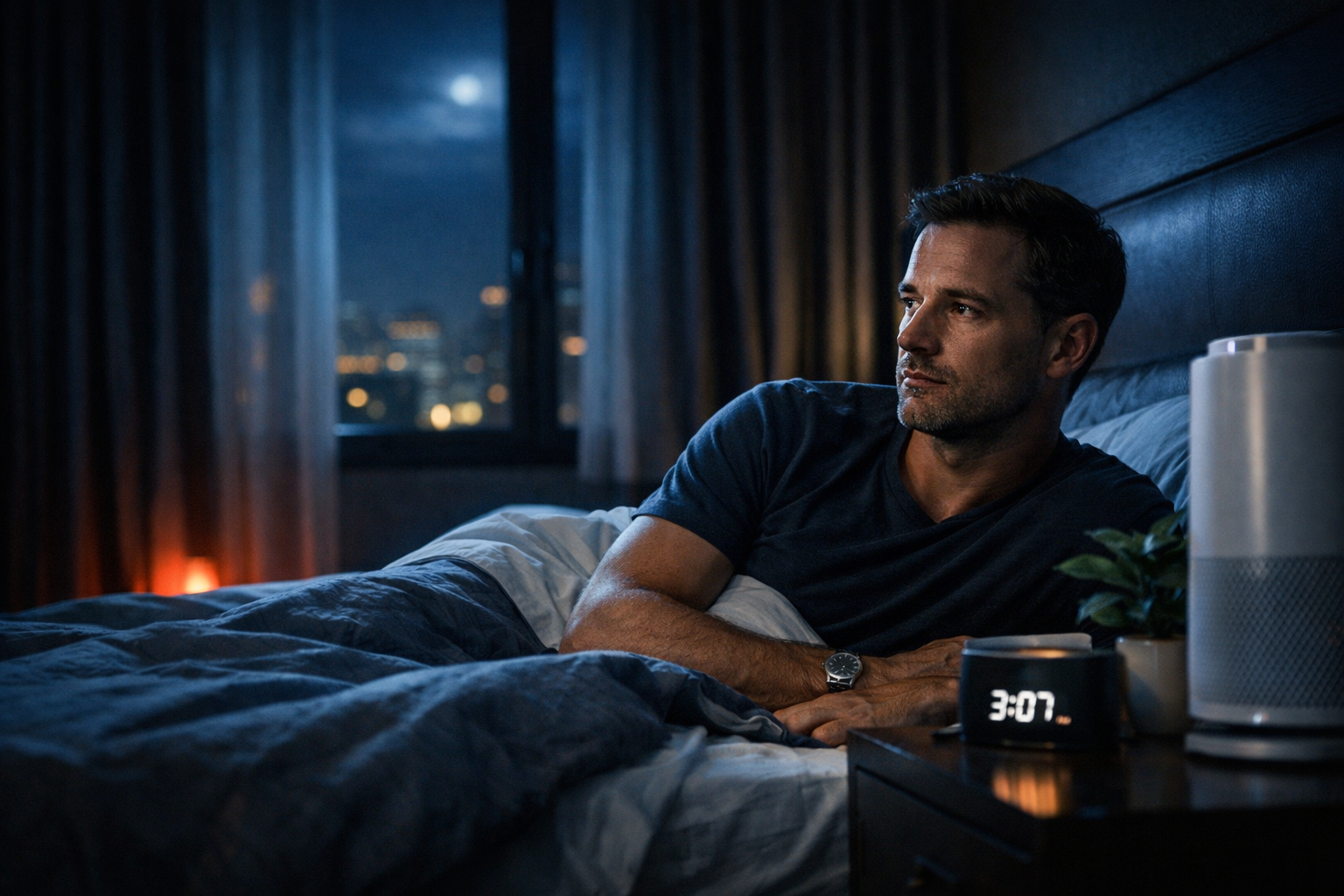
Most people think deep sleep is something you earn from discipline: fewer screens, earlier bedtimes, better supplements. Yet millions still wake up at 3 a.m., exhausted but wired, trapped in light, fragmented sleep.
After reviewing guidance from leading authorities, including Harvard Medical School, Sleep Foundation, Cleveland Clinic, Mayo Clinic, and Stanford University, a different conclusion emerges:
Deep sleep is not a habit problem. It’s an environmental problem.
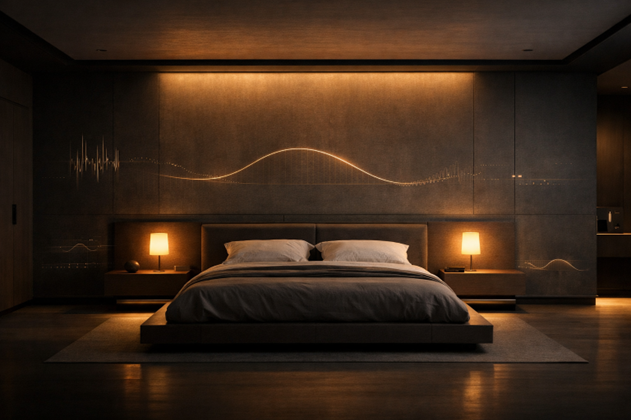
This is where The Sleep Environment Stack™ comes in a complete, science-backed system that transforms your bedroom into a biological signal for deep sleep, REM sleep, and overnight recovery.
Why Sleep Hygiene Alone Isn’t Enough
“Sleep hygiene” advice avoid caffeine, limit screens, relax dominates high-ranking sleep articles across Healthline, NHS, and Harvard Health. These practices help, but they’re incomplete.
Your brain does not fall asleep because you want it to.
It falls asleep when environmental inputs tell your nervous system it is safe to shut down.
The Biology Behind the Problem
Three core systems determine sleep quality:
|
System |
Role in Sleep |
Disrupted By |
|
Circadian rhythm |
Timing of sleep |
Artificial light, late stimulation |
|
Hormonal balance |
Sleep depth |
Elevated cortisol, low melatonin |
|
Autonomic nervous system |
Sleep continuity |
Noise, heat, anxiety |
When these systems receive mixed signals, the body stays in a semi-alert state leading to shallow sleep and night awakenings.

Introducing the Sleep Environment Stack™
The Sleep Environment Stack™ integrates four environmental pillars that research consistently links to improved deep sleep and REM sleep.
Rather than chasing isolated “sleep hacks,” this framework aligns your bedroom with human biology.
Pillar 1: Circadian Lighting Control
Light is the strongest regulator of your sleep-wake cycle.
Research summarized by Harvard Health Publishing shows that exposure to blue-spectrum light at night suppresses melatonin the hormone that initiates sleep and delays entry into deep sleep.
What high-ranking sleep guides agree on:
- Warm light supports melatonin release
- Overhead lighting at night disrupts circadian rhythm
- Darkness improves sleep quality
What they rarely systemize:
How to automate lighting so your environment does the work without willpower.
Best practices
- Amber or red-spectrum lighting (<2700K)
- No overhead lights after sunset
- Gradual dimming as bedtime approaches

Pillar 2: Thermal Regulation (The Deep Sleep Accelerator)
Deep sleep requires a drop in core body temperature.
According to research cited by the Sleep Foundation, the ideal bedroom temperature for sleep typically falls between 60–67°F (15–19°C).
When the body stays too warm:
- Cortisol remains elevated
- REM sleep shortens
- Micro-awakenings increase
Why temperature beats supplements:
No pill can override a hot sleep environment.
Elite sleep environments use
- Micro-climate control (bed-level cooling)
- Consistent overnight temperature stability
- Breathable, heat-dissipating materials

Pillar 3: Deep Pressure & Nervous System Signaling
Deep pressure stimulation activates the parasympathetic nervous system the body’s “rest and repair” mode.
Clinical insights from the Cleveland Clinic link deep pressure to:
- Reduced anxiety
- Lower heart rate
- Improved sleep continuity
This explains why weighted systems often outperform supplements for stress-related insomnia.
Key takeaway:
Your nervous system must feel safe to stay asleep

Pillar 4: Sensory Silence & Air Quality
Even when you’re unconscious, your brain monitors for threats.
Sleep guidance from NHS, Mayo Clinic, and military performance programs highlights:
- Noise disruption fragments deep sleep
- Poor air quality increases micro-arousals
- Sensory inconsistency raises stress hormones
Effective strategies include
- Consistent white or brown noise
- Clean, filtered airflow
- Elimination of unpredictable sounds

Why Most Bedrooms Still Fail
Across lifestyle and medical content from Martha Stewart to Health-line the advice is accurate but fragmented.
|
Common Advice |
Missing Element |
|
|
|
Use warm lighting |
No automation |
|
|
|
Keep room cool |
No precision control |
||
|
Reduce noise |
No consistency |
|
|
|
Relax before bed |
No system |
|
|
Deep sleep requires integration.
The Sleep Environment Stack™ vs. Typical Sleep Advice
|
Feature |
Typical Sleep Tips |
Sleep Environment Stack™ |
|
Focus |
Habits |
Environment |
|
Consistency |
User-dependent |
Automatic |
|
Hormonal impact |
Partial |
Comprehensive |
|
Scalability |
Low |
High |
|
Results |
Inconsistent |
Repeatable |
Turning Knowledge Into Results
When all four pillars work together, the body:
- Enters deep sleep faster
- Stays asleep longer
- Wakes up with genuine recovery
This is why elite performers, athletes, and executives increasingly treat sleep environments as biological infrastructure not lifestyle decor.
The Systemized Solution: The Sleep Sanctum™
The Sleep Sanctum™ translates the Sleep Environment Stack™ into a single, integrated solution removing guesswork, trial-and-error, and piecemeal purchases.
👉 Explore the full system:
https://luxsmarthomeliving.com/pages/the-sleep-sanctum

Deep Sleep Is Engineered
Supplements fade. Habits break. Environments persist. The Sleep Sanctum™ aligns light, temperature, pressure, and sensory calm into one elite sleep system.
Build Your Sleep Sanctuary
🔗 https://luxsmarthomeliving.com/pages/the-sleep-sanctum
Circadian Lighting Upgrade Kit